


In connection with our visit to the Modo Agro seminar, promoted by Citri Caldas, we want to address the impact that the EL Niño phenomenon has on Colombian citrus production, a sector that exceeds one million tons of fresh fruit annually, including Valencia orange, Ombligona orange, Tahiti lime, and mandarin. As it consolidates itself as a key driver of rural development, job creation, and foreign exchange earnings from exports, this industry is positioning itself as one of the fastest-growing agri-food sectors in the country. Therefore, protecting its productive stability against climate threats is not only an agricultural priority, but an economic urgency that demands immediate attention and strategies from the most technical side of agronomic management.
Anyone who has produced citrus in Colombia during an El Niño event knows that the problem is not limited to less rain, but rather to changes such as: the way the tree flowers, how much fruit sets, what size it reaches, what the peel looks like, and even which pests appear first. This post tries to bring together what the scientific literature says with what is observed on the farm, to understand why what happens happens and what can be done, from irrigation and nutrition to the way of estimating how much fruit will be harvested in the coming weeks. One clarification before we begin: almost all published knowledge on citrus physiology comes from subtropical areas such as Florida, California, the Mediterranean, or São Paulo, where a cold season organizes the cycle. In the Colombian tropics that season does not exist, causing important changes and, of course, making the analysis of citrus behavior in these scenarios very interesting. That is why I want to highlight below, in each point, what is direct evidence and what must be adapted with judgment.
But then... What does El Niño do to the Colombian climate?
As we have mentioned in previous editions, El Niño is, together with the ITCZ (Intertropical Convergence Zone), the factor that explains the interannual variability of rainfall in Colombia, since during the warm phase of the Pacific, precipitation and streamflows are notably reduced in much of the Andean and Caribbean regions, which results in higher average temperatures and incident radiation due to reduced cloud cover. For citrus growers, this translates into a combination of several factors such as: less water in the soil, greater atmospheric demand, and more direct energy on leaves and fruits, which cause the tree to suffer more. The key concept here is vapor pressure deficit, or VPD. With warmer and drier air, the difference between the humidity inside the leaf and that of the environment skyrockets, causing the tree to lose water faster than the root can replenish it, even if there is still moisture in the soil. That is why in a strong El Niño, wilted trees are seen at midday in plots that, according to the tensiometer, were not that dry. Citrus are quite sensitive in this regard: they close stomata at relatively moderate leaf water potentials, prioritizing survival, and with that photosynthesis is slowed, triggering an inevitable drop of flowers and small fruits, affecting those that manage to remain on the tree and reducing crop productivity. (Syvertsen, 1982; Syvertsen and Lloyd, 1994).
What is the difference between a tropical citrus and a subtropical one?
In Spain or the United States, winter induces flowering, low temperatures activate the CiFT gene, which leads the tree to differentiate flower buds, and therefore there is a main flowering in spring and a very well-defined harvest. In the tropics, where nights do not drop enough in temperature, the stimulus that plays the role of floral induction is water stress, which raises abscisic acid levels, stopping vegetative growth and inducing the floral response in the meristem, since it has been shown that periods of drought of a few weeks, followed by rain or irrigation, allow trees to absorb water, rehydrate, and buds respond massively by inducing intense flowering in lemons and other citrus in tropical regions. (García-Luis et al., 1995; Valiente and Albrigo, 2004) Taking the above into account, in Colombia we have two well-marked rainy seasons (March-May and September-November) interrupted by two dry seasons. This usually generates two main harvests per year (the main harvest and the "mitaca" or off-season harvest). However, since tropical climate is not perfect, rainfall can occur in any month, which causes:
- Different cohorts of bud production: A branch that suffered stress in January flowers in February with the first rains and will produce fruit ready to harvest in September-October.
- Out-of-season flowering: If a heavy downpour falls in the middle of a dry spell in June, only the buds that were genetically prepared will respond by flowering.
- Coexistence of stages: While one new branch is flowering, neighboring branches are still feeding the fruits from the previous flowering (green or already yellow/ripe fruits). This means that on the same tree there can be flowers, green fruit, and ripe fruit at the same time, and the "strong" harvests do not coincide with a fixed calendar but are defined by the dry seasons and the rains that followed them. This phenomenon is known as overlap of phenological stages.
With El Niño, this mechanism becomes a double-edged sword. A moderate drought followed by rain can produce abundant flowering. A prolonged and severe drought, on the other hand, arrives with the tree without reserves, and the flowers that emerge set poorly or fall. That is why physiological fruit drop is one of the most visible effects. Young fruits compete for carbohydrates and growth regulators, and when the tree is stressed and photosynthesizes little, it abandons the lower-priority ones (Iglesias et al., 2007). Nebauer et al. (2011) also showed that photosynthesis is downregulated when the tree accumulates carbohydrates it cannot use, a reminder that the source-sink relationship matters as much as available water. And since the tree’s fruit load also influences the next flowering, what happens today with fruit set is reflected months later (Verreynne and Lovatt, 2009).
Citrus fruit follows a three-phase growth curve: first comes cell division, then a period of rapid growth through cell expansion, and finally a ripening phase in which growth slows and sugars, acids, and color change. Not all phases tolerate water shortage equally. Ginestar and Castel (1996), working with clementines, found that deficit during the expansion phase penalizes final size much more than deficit during the ripening phase. Pérez-Pérez et al. (2009), with Lane Late orange, found that a controlled deficit in the late phase barely affected yield and improved some quality parameters. For Colombia, the difficulty is that, with staggered flowering, the same plot has fruits in different phases when drought arrives. One and the same week of deficit may be tolerable for fruit that is already ripening and harmful for fruit that is just beginning to expand. That mix is the main reason why it is advisable to record each flowering separately, something I return to later.
The effect of drought on quality is more nuanced than is usually thought. With moderate water deficit, the soluble solids and acidity content in the juice tends to rise, partly due to concentration and partly because the tree actively accumulates sugars and organic acids (Hockema and Etxeberria, 2001; Ballester et al., 2011). Hutton and Loveys (2011) observed similar results with partial root-zone drying irrigation. The price paid is smaller fruit size and, if the stress is severe, lower total yield. In Colombian practice, the picture is more complicated. Small fruit size hurts price in the fresh market, and juice percentage can drop when the peel thickens or the fruit dehydrates on the tree. After a prolonged drought, sudden rain can cause splitting or cracking due to the abrupt change in turgor in the cell walls, something frequently seen in mandarins and tangelos. And in the tropics there is a color detail: without cold nights that degrade peel chlorophyll, many oranges and mandarins ripen with green peel or with "re-greening," which has nothing to do with internal maturity but does affect commercial acceptance.
The microclimate of a citrus crop is defined by planting density, canopy shape, ground cover, wind, and cloudiness. With El Niño, clear skies increase direct radiation on exposed fruit, and the fruit surface temperature can exceed air temperature by several degrees. When a certain threshold is exceeded, radiation damage appears: bronze or brown spots on the side of the fruit facing the sun, peel depressions, and, in severe cases, necrosis of the flavedo or peel tissue. What we dismiss as "fruit burn" is usually a mix of heat, ultraviolet radiation, and excess photosynthetically active radiation that exceeds the tissue’s protective capacity (Schrader, 2011). Leaves also pay the price. With high leaf temperatures and closed stomata, photosynthesis drops and photoinhibition appears. One of the most studied tools to buffer this effect is particle films, especially with kaolin. Jifon and Syvertsen (2003) reported that kaolin in grapefruit improved photosynthesis and water use efficiency by lowering leaf temperature, and Glenn et al. (2002) explained the physical mechanisms of radiation reflection in apple, which are applicable to other fruit crops such as citrus in this case. It is not a universal solution: the timing of application, product quality, and fruit cleanliness at harvest must be considered, but for plots with highly exposed fruit it is a reasonable option. In short, the combination of strategic pruning and sun protectants helps slow the mechanical and physiological damage caused by radiation. However, the real challenge of El Niño becomes established when high radiation is combined with prolonged water deficit. This stress state in the tree not only alters its metabolism, but also significantly alters the plot microclimate, opening the door to a scenario where drought acts as a decisive catalyst for increased pest pressure. Based on the above, we will address a series of highly important factors that play a fundamental role in citrus and the prominence that the driest periods have over them:
1. Why does drought favor pests?
The relationship between water stress and pests has been discussed for decades. White (1984) proposed that stressed plant tissues become nutritionally more favorable for sucking insects because the concentration of soluble nitrogen increases, and Huberty and Denno (2004) reviewed the evidence and concluded that the effect depends on the type of herbivore: those that feed on phloem or cell contents, such as mites, thrips, and aphids, usually benefit from stress, while chewers respond less consistently. This matches what is seen in the field. In dry periods, mites increase, including citrus rust mites and red spider mites, as well as thrips that scrape the epidermis of small fruits, which are left with scars from that early damage. Davies and Albrigo (1994) and Agustí (2003) describe those dynamics in detail. Added to this are the synchronized flushes that follow the first rain, which attract the Asian citrus psyllid Diaphorina citri, vector of the bacterium associated with HLB Huanglongbing, a phytosanitary threat that occupies a central place in Colombian citrus production. A stressed tree, with fewer reserves, has less capacity to tolerate damage. That is why pest monitoring in an El Niño year should be intensified rather than relaxed.
2. Water: What should be done when there is little?
The first question is how much water the tree really needs. The FAO methodology (Allen et al., 1998) calculates demand from reference evapotranspiration and a crop coefficient that, for citrus, ranges between 0.65 and 0.75 depending on whether or not there is active vegetative cover between rows. Knowing that number for each farm, with data from a nearby or on-farm weather station, makes it possible to stop irrigating by habit and start irrigating by balance. When water is truly scarce, controlled deficit irrigation is one of the best documented strategies. It consists of applying less water during the phases when the tree is more tolerant and protecting critical periods, such as fruit set and rapid fruit expansion (Ginestar and Castel, 1996; Pérez-Pérez et al., 2009; Ballester et al., 2011). Partial root-zone drying irrigation, which alternates the wetted side of the tree, also showed significant water savings with minimal production losses in orange orchards (Consoli et al., 2017; Hutton and Loveys, 2011), although it requires an irrigation design that not all farms have. Without going that far, there are measures that any farm can evaluate. Maintaining a dead cover or mulch under the canopy reduces soil evaporation. Controlling competing weeds in the tree basin, without leaving the soil bare across the entire row, protects moisture. Reducing the interval between irrigations in micro-sprinkler or drip systems, applying smaller but more frequent amounts, improves uptake in light-textured soils. And the rootstock also matters: drought tolerance varies among materials such as Cleopatra, Swingle citrumelo, or the Volkameriana types widely promoted by ICA, with clear differences in how they maintain photosynthesis under deficit and adapt to different soil and climate types (Medina et al., 1998; Castle, 2010), improving productivity and pest/disease control (such as citrus tristeza). That decision is made at planting, but it is worth keeping in mind for replanting. In areas with irrigation water of questionable quality, salinity adds to the stress and worsens everything above, as Syvertsen and García-Sánchez (2014) explain. With less rainwater to leach salts, irrigation with high conductivity can accumulate problems in the root zone before they become visible in the foliage.
3. Nutrition and its relationship with priorities during drought
Talking about water without talking about nutrition leaves half the problem untouched. A well-nourished tree tolerates stress better, but drought in turn limits nutrient uptake, because most nutrients reach the root dissolved in water or by diffusion in moist soil. Potassium deserves special attention. It participates in osmotic regulation and stomatal control, and is associated with larger fruit size and better juice quality; Alva et al. (2006) reviewed how potassium management affects production and quality, and Mattos Jr. et al. (2005) compiled recommendations for Brazilian conditions that are quite similar to Colombian ones in acidic, low-fertility soils. Nitrogen, on the other hand, requires caution: Quiñones et al. (2007) showed that splitting applications and the irrigation system determine how much of the applied nitrogen actually reaches the tree and how much is lost. In drought, applying high nitrogen doses to dry soil does little for the tree and can increase the risk of local salinity and disordered vegetative flushing, which consumes reserves and attracts pests. Calcium, boron, and magnesium also appear on the list when it comes to peel quality and resistance to physiological disorders. The most useful thing to do in an El Niño year is to rely on leaf and soil analysis rather than applying the same program as always. In the tropics, attention must be paid to which leaf is sampled, because without a defined season, leaf age and its relationship with the flushing and fruiting cycle change the result. The reasonable approach is to standardize sampling by plot, with leaves of similar age (for example, four to seven months old on fruitless shoots), and repeat it under the same conditions in order to compare between years. A practical idea: instead of thinking in terms of an annual program, think in terms of one program per flowering event. Each flowering flush has its moment of high nutrient demand (fruit set, expansion, ripening), and fertilization should be aligned with those windows and with available moisture, not with the calendar month. Ultimately, nourishing citrus during a drought is not about following a fixed recipe, but about reading the tree’s state and acting in sync with its moments of greatest demand. But to nourish precisely, it is first necessary to know how big the challenge ahead is. This brings us to a decisive factor for strategic farm management: yield prediction, a fundamental tool not only for estimating production and organizing logistics, but also for adjusting nutritional decisions in time according to the fruit load the tree can actually sustain.
How do you estimate the harvest for the coming weeks when there is no marked cycle?
Unlike subtropical areas, where a single concentrated flowering simplifies yield estimation, the Colombian tropics face the challenge of overlapping flowering flushes. Here the key is not to count fruit at a fixed point in the year, but to track what proportion of each flowering pulse will reach maturity and when it will do so. The starting point remains rigorous plot-by-plot recording: date of full bloom, intensity, and fruit set percentage using BBCH phenological scales adapted to tropical citrus. After physiological drop, crop load monitoring is done by tracking fruit density per tree. To project commercial size, instead of relying on rigid theoretical curves, growth functions adjusted by thermal time (accumulated degree-days) are now used, allowing ripening speed to be recalculated according to temperature fluctuations and water stress in each season. This field agronomy is now enhanced with precision agriculture and machine learning technologies. Computer vision (through images taken with smartphones, machinery sensors, or drones) makes it possible to quickly count fruit and flowers in the canopy, while machine learning models (such as Random Forest) allow integration of historical yield data, climate variables, and vegetation indices (NDVI/NDRE). Although canopy density in citrus still imposes limits on purely optical detection, making visual counting a complement rather than a total replacement, the combination of thermal time, artificial vision, and field records offers increasingly accurate weekly volume estimates. However, we must be clear: no algorithm or growth curve predicts the anomalies of an El Niño event with exactness if it was not trained with extreme drought data. In atypical years, the estimate should not be delivered as a definitive figure, but as a range of uncertainty that is continuously recalibrated as the season progresses.
In one of our previous blogs we explored how spectral indices allow us to monitor crop status from space, how to interpret metrics such as NDVI or NDWI, and how to overcome the cloud-cover limitations typical of our geographic area. It is worth revisiting this concept in the context of an El Niño event, where remote sensing goes from being a technological curiosity to a tactical diagnostic tool. While NDVI shows us canopy density and vigor, indices focused on chlorophyll reflectance and canopy hydration (such as NDWI or NDRE) detect drops in turgor pressure and leaf water content days or weeks before the tree shows visual wilting. In perennial crops such as dense-canopy, evergreen citrus, the absolute values of these indices change slowly. Therefore, their true agronomic value is not in reading an isolated number, but in detecting deviations from the historical record of the same plot and comparing the farm’s intrinsic variability.
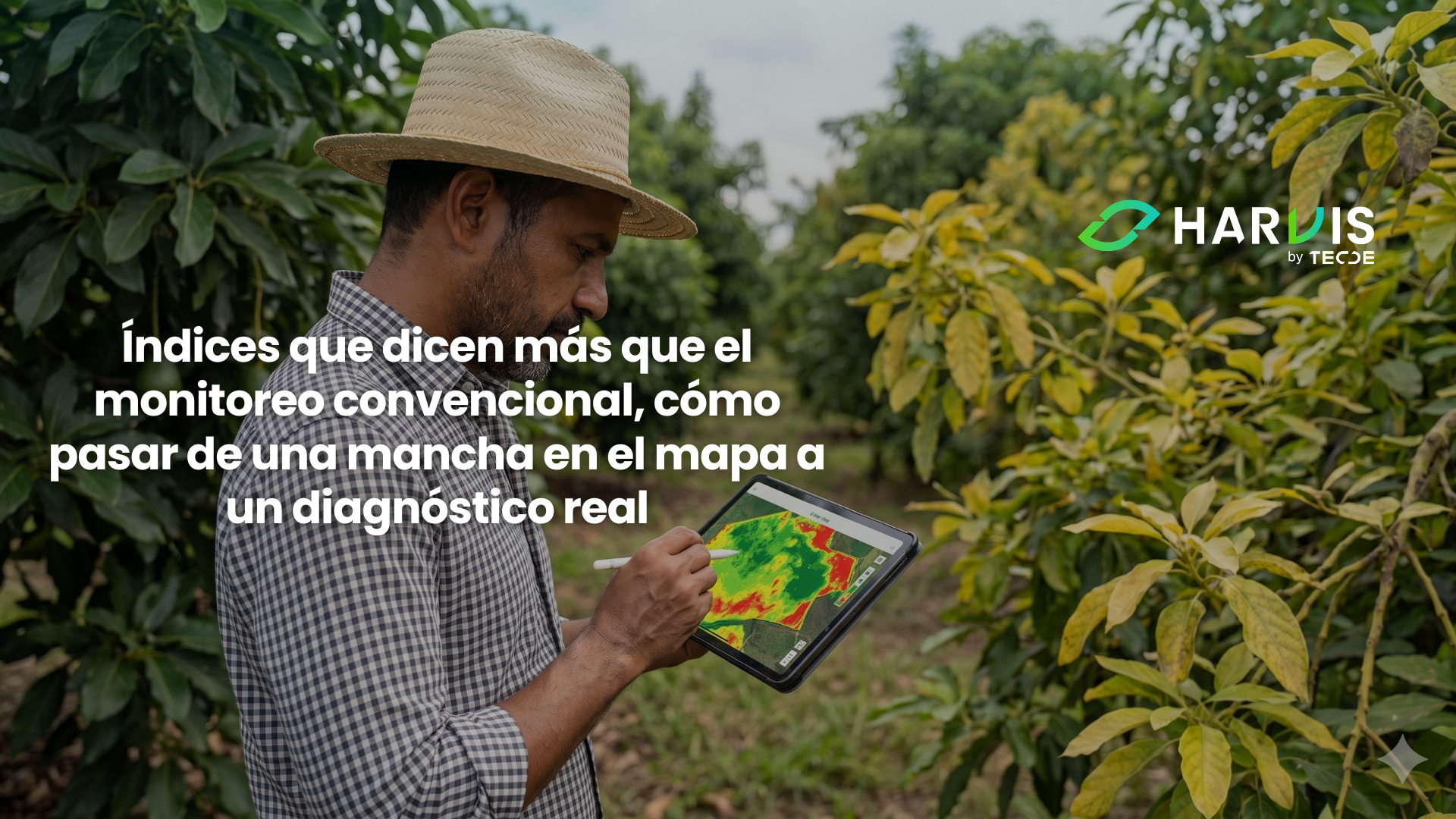
What are these indices concretely useful for in citrus during a drought?
- Mapping variability and irrigation zoning: They identify which areas of the plot suffer water deficit first due to variations in soil texture or topography, allowing irrigation turns to be prioritized or water delivery to be adjusted by sector.
- Early detection of defoliation and stress: They allow subtle loss of leaf area due to leaf drop or attack by secondary pests associated with drought (such as mites) to be monitored, guiding field scouting toward the "hotspots."
- Evaluation of flowering and flushing uniformity: After a rain pulse during drought, abrupt changes in spectral vigor help quantify how even the vegetative or floral response of the plot was, a fundamental piece of data for projecting fruit set and adjusting nutrition.
- Optimization of inputs and foliar fertilization: They serve as a basis for designing variable-rate application maps, avoiding spending biostimulants or nutrients on healthy areas and concentrating them on trees with moderate stress to speed recovery.
Remote sensing does not replace boots-on-the-ground agronomy; rather, it functions as an early warning system: it tells us precisely where and when to go look before yield damage becomes irreversible.
Harvis: bringing field data, climate, and prediction together in one place
All of the above has a practical problem: there is a lot of data living in different places. Fruit counts in a notebook, phenology in the technician’s head, climate in a separate station, satellite images on another platform, and input applications in a spreadsheet. When El Niño arrives and decisions must be made quickly, putting all that together consumes the time that is not available. Harvis was created to solve that part. It is an agricultural management system designed to keep traceability of what happens in each plot, track tasks, flowering events, and applications, and build predictions from that history. In the case of citrus, where the harvest is not organized by a calendar but by flowering events, having those events recorded and connected with climate and satellite monitoring is what allows the estimate for the coming weeks to have a basis and not be a hunch. And since each cycle feeds the next, the system improves its estimate as it accumulates information from the farm itself, which is the only thing that truly describes how that material, that soil, and that management behave.
El Niño cannot be avoided, but you can arrive better prepared. Understanding that the tree responds differently depending on the growth phase it is in when drought hits, that nutrition and water are not managed separately, that radiation and pests accumulate on an already stressed tree, and that harvest in a system without seasonality is estimated by events and not by calendar, already changes the way decisions are made. The rest is to record with discipline, measure what can be measured, and adjust each cycle.
Sources consulted
- Agustí, M. (2003). Citricultura (2nd ed.). Mundi-Prensa, Madrid.
- Albrigo, L. G., Valiente, J. I., and Zekri, M. (2011). Phenology and fruit growth models for citrus production under changing climate conditions. Proceedings of the Florida State Horticultural Society, 124, 62-68.
- Allen, R. G., Pereira, L. S., Raes, D., and Smith, M. (1998). Crop evapotranspiration: guidelines for computing crop water requirements. FAO Irrigation and Drainage Paper 56. FAO, Rome.
- Alva, A. K., Mattos, D., Paramasivam, S., Patil, B., Dou, H., and Sajwan, K. S. (2006). Potassium management for optimizing citrus production and quality. International Journal of Fruit Science, 6(1), 3-43.
- Ballester, C., Castel, J., Intrigliolo, D. S., and Castel, J. R. (2011). Response of Clementina de Nules citrus trees to summer deficit irrigation. Yield components and fruit composition. Agricultural Water Management, 98, 1027-1032.
- Breiman, L. (2001). Random forests. Machine Learning, 45, 5-32.
- Castle, W. S. (2010). A career perspective on citrus rootstocks, their development, and commercialization. HortScience, 45, 11-15.
- Consoli, S., Stagno, F., Vanella, D., Boaga, J., Cassiani, G., and Roccuzzo, G. (2017). Partial root-zone drying irrigation in orange orchards: effects on water use and crop production characteristics. European Journal of Agronomy, 82, 190-202.
- Davenport, T. L. (1990). Citrus flowering. Horticultural Reviews, 12, 349-408.
- Davies, F. S., and Albrigo, L. G. (1994). Citrus. CAB International, Wallingford.
- Ganesh, P., Volle, K., Burks, T. F., and Mehta, S. (2019). Deep learning based orange detection for in-field yield estimation. Computers and Electronics in Agriculture, 162, 285-299.
- García-Luis, A., Kanduser, M., Santamarina, P., and Guardiola, J. L. (1995). Low temperature influence on flowering in Citrus. The separation of inductive and bud dormancy releasing effects. Physiologia Plantarum, 94, 133-140.
- Ginestar, C., and Castel, J. R. (1996). Responses of young clementine citrus trees to water stress during different phenological periods. Journal of Horticultural Science, 71, 551-559.
- Glenn, D. M., Prado, E., Erez, A., McFerson, J., and Puterka, G. J. (2002). A reflective, processed-kaolin particle film affects fruit temperature, radiation reflection, and solar injury in apple. Journal of the American Society for Horticultural Science, 127, 188-193.
- Hockema, B. R., and Etxeberria, E. (2001). Metabolic contributors to drought-enhanced accumulation of sugars and acids in oranges. Journal of the American Society for Horticultural Science, 126, 599-605.
- Huberty, A. F., and Denno, R. F. (2004). Plant water stress and its consequences for herbivorous insects: a new synthesis. Ecology, 85, 1383-1398.
- Hutton, R. J., and Loveys, B. R. (2011). A partial root zone drying irrigation strategy for citrus: effects on water use efficiency and fruit characteristics. Agricultural Water Management, 98, 1485-1496.
- Jifon, J. L., and Syvertsen, J. P. (2003). Kaolin particle film applications can increase photosynthesis and water use efficiency of 'Ruby Red' grapefruit leaves. Journal of the American Society for Horticultural Science, 128, 107-112.
- Kamilaris, A., and Prenafeta-Boldú, F. X. (2018). Deep learning in agriculture: A survey. Computers and Electronics in Agriculture, 147, 70-90.
- Mattos Jr., D., De Negri, J. D., Pio, R. M., and Pompeu Jr., J. (eds.) (2005). Citros. Instituto Agronômico and Fundag, Campinas.
- Medina, C. L., Machado, E. C., and Pinto, J. M. (1998). Photosynthesis of 'Valencia' orange grafted onto four rootstocks and subjected to water deficit. Bragantia, 57, 15-22.
- Melgarejo, P., Martínez, J. J., Hernández, F., Martínez-Font, R., Barrows, P., and Erez, A. (2004). Kaolin treatment to reduce pomegranate sunburn. Scientia Horticulturae, 100, 349-353.
- Nebauer, S. G., Renau-Morata, B., Guardiola, J. L., and Molina, R. V. (2011). Photosynthesis down-regulation precedes carbohydrate accumulation under sink limitation in Citrus. Tree Physiology, 31, 169-177.
- Obreza, T. A., and Morgan, K. T. (eds.) (2008). Nutrition of Florida citrus trees (2nd ed.). University of Florida, IFAS Extension, SL253.
- Orduño-Cruz, A., Rodríguez-González, A., and Hernández-Díaz, J. (2019). Modeling thermal time and fruit growth dynamics in sweet orange (Citrus sinensis) under tropical conditions. Tropical and Subtropical Agroecosystems, 22(3), 415-427.
- Pérez-Pérez, J. G., Robles, J. M., and Botía, P. (2009). Influence of deficit irrigation in phase III of fruit growth on fruit quality in 'Lane Late' sweet orange. Agricultural Water Management, 96, 969-974.
- Poveda, G., and Mesa, O. J. (1997). Feedbacks between hydrological processes in tropical South America and large-scale ocean-atmospheric phenomena. Journal of Climate, 10, 2690-2702.
- Poveda, G., Jaramillo, A., Gil, M. M., Quiceno, N., and Mantilla, R. I. (2001). Seasonality in ENSO-related precipitation, river discharges, soil moisture, and vegetation index in Colombia. Water Resources Research, 37, 2169-2178.
- Poveda, G., Waylen, P. R., and Pulwarty, R. S. (2006). Annual and inter-annual variability of the present climate in northern South America and southern Mesoamerica. Palaeogeography, Palaeoclimatology, Palaeoecology, 234, 3-27.
- Quiñones, A., Martínez-Alcántara, B., and Legaz, F. (2007). Influence of irrigation system and fertilization management on seasonal distribution of N in the soil profile and on N uptake by citrus trees. Agriculture, Ecosystems and Environment, 122, 399-409.
- Reuther, W. (1973). Climate and citrus behavior. In W. Reuther (ed.), The Citrus Industry, vol. III. University of California, Division of Agricultural Sciences.
- Reuther, W. (1977). Citrus. In P. T. Alvim and T. T. Kozlowski (eds.), Ecophysiology of Tropical Crops. Academic Press, New York.
- Rios-Rojas, L., Rodríguez, A., and Orduz-Rodríguez, J. O. (2020). BBCH phenological scale adapted for citrus under tropical conditions in Colombia. Corporación Colombiana de Investigación Agropecuaria (AGROSAVIA), Mosquera.
- Schrader, L. E. (2011). Scientific basis of a unique formulation for reducing sunburn of fruits. HortScience, 46, 6-11.
- Southwick, S. M., and Davenport, T. L. (1986). Characterization of water stress and low temperature effects on flower induction in citrus. Plant Physiology, 81, 26-29.
- Syvertsen, J. P. (1982). Minimum leaf water potential and stomatal closure in citrus leaves of different ages. Annals of Botany, 49, 827-834.
- Syvertsen, J. P., and García-Sánchez, F. (2014). Multiple abiotic stresses occurring with salinity stress in citrus. Environmental and Experimental Botany, 103, 128-137.
- Syvertsen, J. P., and Lloyd, J. J. (1994). Citrus. In B. Schaffer and P. C. Andersen (eds.), Handbook of Environmental Physiology of Fruit Crops, vol. II: Sub-tropical and tropical crops. CRC Press, Boca Raton.
- Valiente, J. I., and Albrigo, L. G. (2004). Flower bud induction of sweet orange trees [Citrus sinensis (L.) Osbeck]: effect of low temperatures, crop load, and bud age. Journal of the American Society for Horticultural Science, 129, 158-164.
- Verreynne, J. S., and Lovatt, C. J. (2009). The effect of crop load on budbreak influences return bloom in alternate bearing 'Pixie' mandarin. Journal of the American Society for Horticultural Science, 134, 299-307.
- White, T. C. R. (1984). The abundance of invertebrate herbivores in relation to the availability of nitrogen in stressed food plants. Oecologia, 63, 90-105.